
Morton County Marriage Licenses
Marriage licenses in Morton County are handled through the district court marriage license process. The official county page says a worksheet is required and may be completed by either bride or groom. The license fee is due when the license is picked up, and a full three-day waiting period runs after the worksheet is completed and returned to the clerk's office.
Under-18 applicants have extra requirements. Morton County says an applicant under 18 needs the ID of a parent or consenting guardian and must complete a special affidavit with both parents' notarized consent. That affidavit is available from the Clerk's office. Adult applicants should still prepare full identifying and family information before starting because the worksheet asks for more than names and dates.
The local requirements shown below are sourced from the Morton County marriage licenses page.
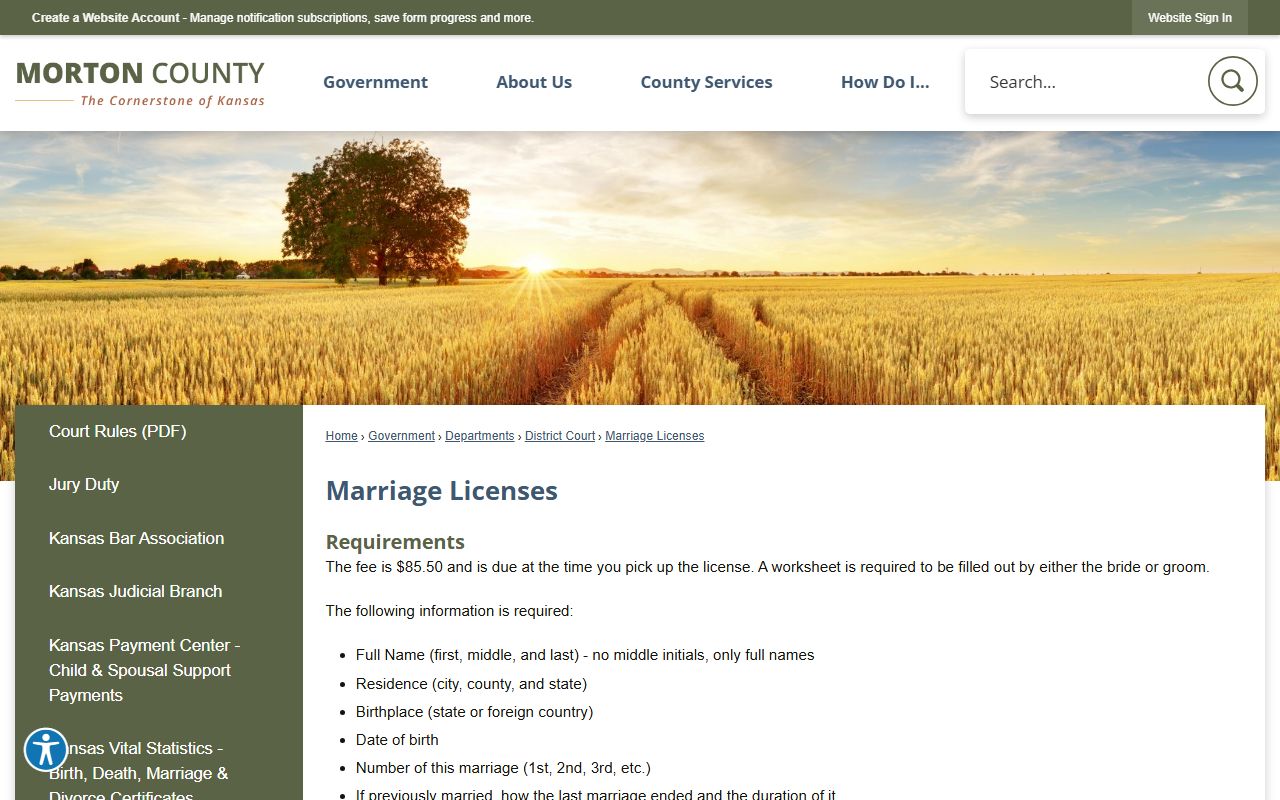
The county source is especially useful because it lists the worksheet fields and the local pickup timing for Morton County marriage records.
Apply for a Morton Marriage License
The Kansas Judicial Branch also publishes a statewide marriage license self-help process. Morton County applicants should use the state process and the local county requirements together, because the completed license is first filed with the Clerk of the District Court in the county where it was issued and later forwarded to KDHE Office of Vital Statistics.
- Review the Morton County marriage license requirements and gather full legal, residence, birth, prior-marriage, parent, and officiant details.
- Complete the required marriage worksheet through the approved Kansas process or through the clerk's office instructions.
- Return the completed worksheet to the Clerk of the District Court and wait the full three-day period before pickup.
- Pay the marriage license fee when the license is picked up.
- After the ceremony, make sure the completed license is returned for filing so it can be sent to KDHE.
Note: County-level marriage information is open at the district court level, while certified KDHE vital certificates are not public records.
Morton County Marriage Worksheet
The Morton County marriage worksheet requires detailed biographical and family information. Full names must be written out, with no middle initials. Prior marriages require the way the last marriage ended and the duration of that marriage. If the officiant is known, the worksheet asks for the officiant's name and address.
| Field | Required | Notes |
|---|---|---|
| Full name | Yes | First, middle, and last name; no middle initials. |
| Residence | Yes | City, county, and state. |
| Birthplace and date of birth | Yes | State or foreign country for birthplace. |
| Number of this marriage | Yes | First, second, third, and so on. |
| Prior marriage ending | Conditional | Required if previously married, including how the last marriage ended and its duration. |
| Race and education | Yes | Highest education completed is requested. |
| SSN, ID, or driver's license number | Yes | One identifying number is listed in the county requirements. |
| Parents' full names and birthplaces | Yes | Father's full name and mother's full name including maiden name. |
| Officiant name and address | If known | Person performing the ceremony. |
| Parent or guardian ID and affidavit | Conditional | Applies to under-18 applicants; notarized parent consent is required. |
Morton Marriage and Divorce Fees
Morton County publishes the local marriage license fee, while KDHE publishes certified certificate fees for marriage and divorce vital records. The divorce filing fee comes from Kansas self-help fee notes cited in the research. Court-copy fees for divorce decrees or other district court documents follow Kansas Judicial Branch court-record fee guidance unless the clerk gives a current local update.
| Item | Amount or Rule |
|---|---|
| Morton County marriage license | $85.50, due when the license is picked up |
| KDHE certified marriage certificate | $20 per certified copy |
| KDHE certified divorce certificate | $20 per certified copy |
| VitalChek expedited service | $15 expedited service fee in addition to the $20 certificate fee |
| iKan certificate processing | $5 processing fee in addition to the $20 certificate fee, one certified copy per order |
| Divorce or paternity filing | $195 under Kansas self-help fee notes |
| Post-judgment divorce or paternity motion | $62 under Kansas self-help fee notes |
| Court copies and certification | $0.25 per page and $10 per certified court document |
Certified Morton Marriage Certificates
KDHE says Kansas marriage certificates began being filed with the Office of Vital Statistics on May 1, 1913. For Morton County, the completed marriage license is first filed with the Clerk of the District Court in the issuing county, then forwarded to KDHE. County-level marriage information is open to the public at the district court, but certified state certificates require the KDHE vital-record process.
Certificate order channels include walk-in, internet or telephone through VitalChek, iKan app, and mail. Walk-in service is Monday through Friday, 9 a.m. to 4 p.m., and generally takes 15 to 20 minutes if the record is easy to locate. Internet and phone orders through VitalChek take 3 to 5 business days after receipt. Mail orders generally take 7 to 10 business days depending on request volume.
The state certificate details are shown on the KDHE marriage certificate page.
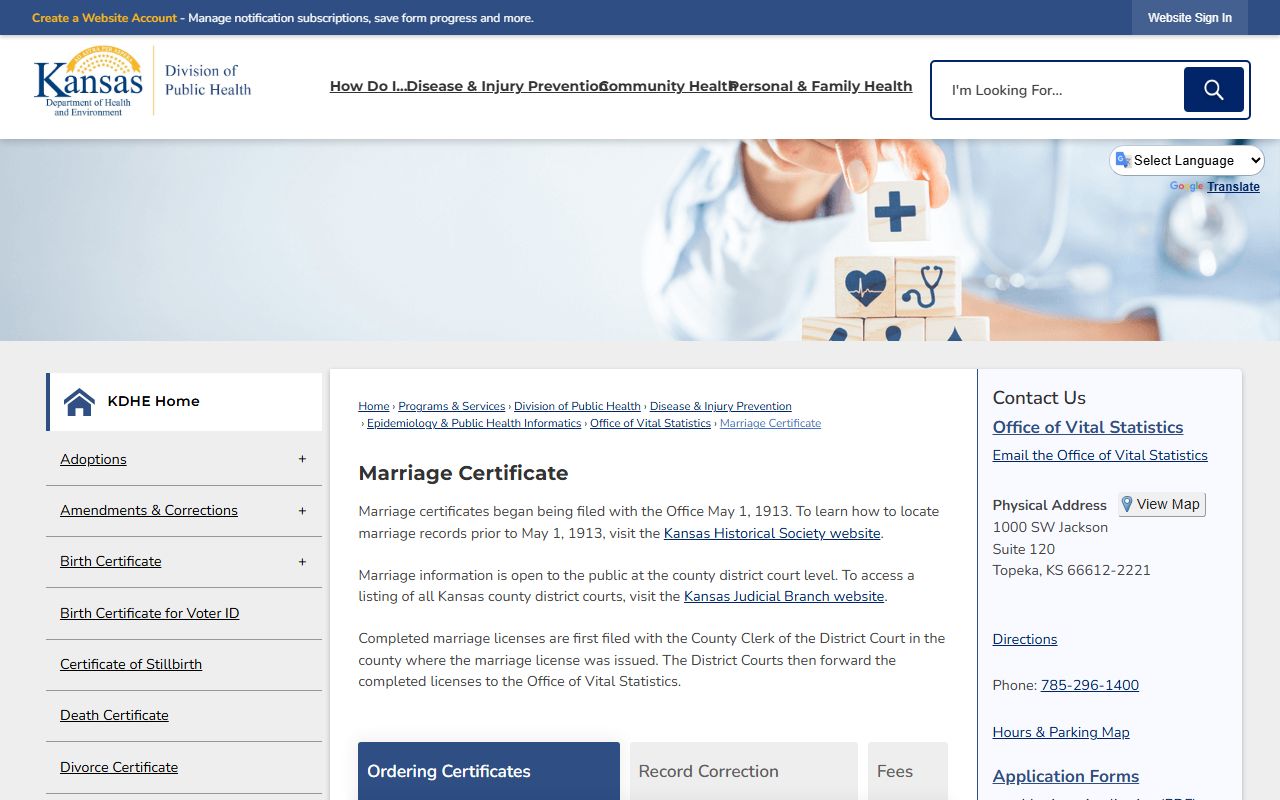
That KDHE channel is for certified certificates, while the local court remains the filing point for Morton County marriage license records.
Morton County Divorce Records
Divorce is a Morton County District Court case type because Kansas district courts handle divorce and domestic relations. A divorce case file or decree is different from a KDHE divorce certificate. The case file can include the petition, civil cover sheet, service forms, domestic relations affidavit, child support worksheet, parenting plan, notice of hearing, decree, and related orders when those documents exist and are public.
Public access may be more limited for domestic relations material than for simple civil records. A Morton County divorce records search can start with Kansas CaseSearch when the public case data is available, then move to the courthouse terminal or a written request to the Clerk of the District Court for copies or certification. Sensitive personal, minor-child, financial, or sealed material may be redacted or withheld.
Certified state divorce certificates are described on the KDHE divorce certificate page.
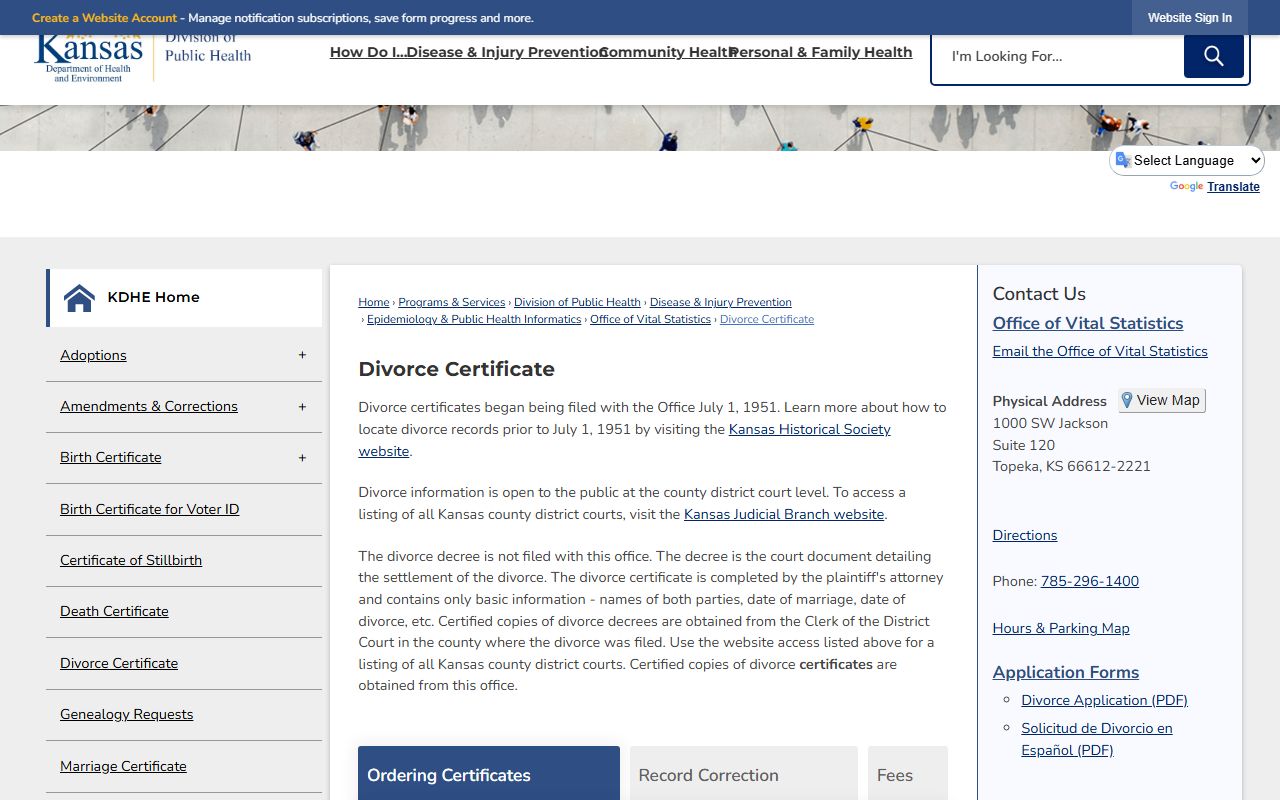
KDHE certificates verify the event, but they do not replace the divorce decree or full district court divorce file.
KDHE Vital Records Channels
The KDHE Office of Vital Statistics states that vital records are not public records and may be released only to eligible requesters. That rule is important for Morton County marriage and divorce records because a person may be able to inspect open county-level marriage information but still need eligibility and identification for a certified state certificate.
The KDHE divorce application notes that the $20 divorce certificate fee covers a five-year search, either the year listed plus two years before and after or a specified consecutive five-year period. Regular and priority mail orders use the KDHE mail-order process and payment instructions. KDHE directs pre-May 1, 1913 marriage research to historical sources, and the research did not find a complete Morton County genealogy inventory.
The vital-record access rules are summarized by the KDHE Office of Vital Statistics.
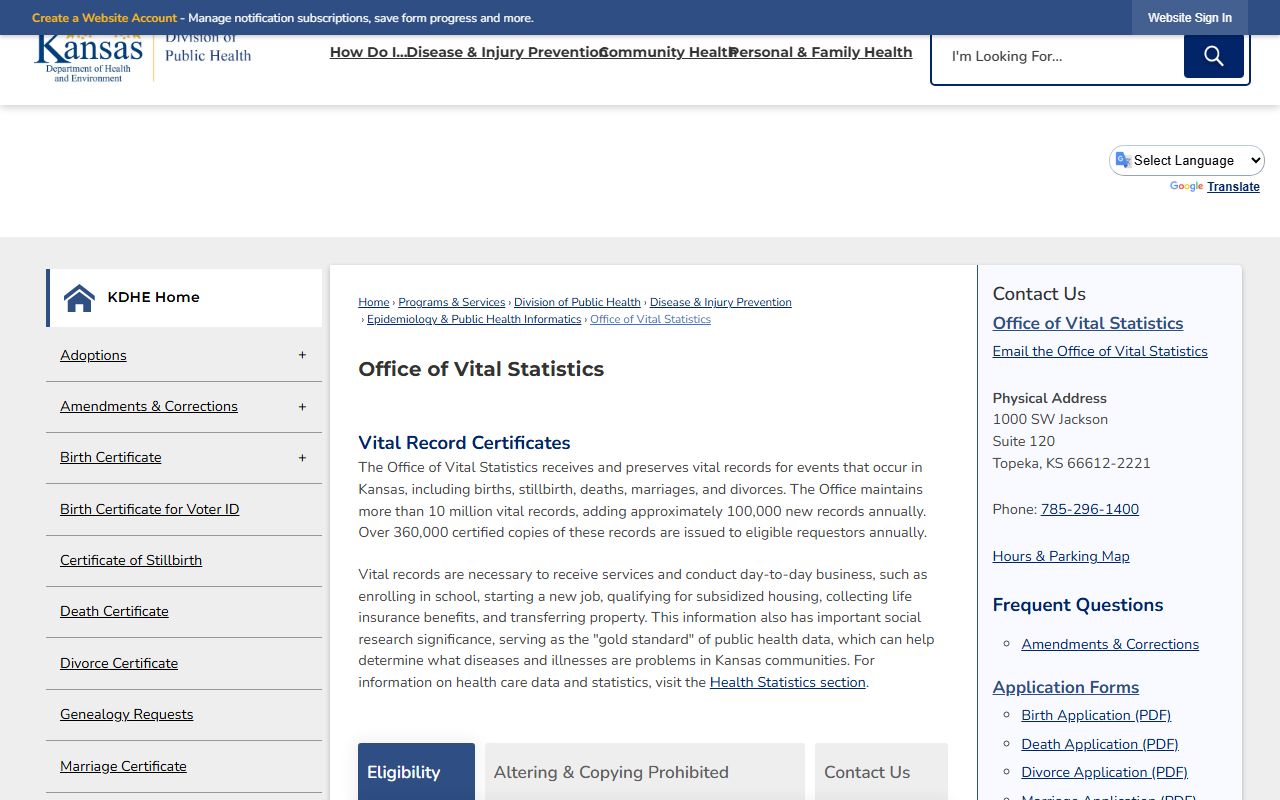
Use KDHE for certified certificates and Morton County District Court for local license filing questions, divorce decrees, and court case records.
KDHE Office of Vital Statistics
1000 SW Jackson, Suite 120
Topeka, KS 66612
785-296-1400
Morton County District Court
1025 Morton Street
Elkhart, KS 67950
620-697-2563
Marriage licenses, divorce files, decrees, and written court-record requests.
Public and Restricted Family Records
Morton County marriage information is open at the county district court level, but KDHE certified vital certificates are not public records. Divorce case records are court records, yet family files can contain restricted or redacted information. Social Security numbers, financial account data, protected addresses, child-related details, and sealed filings should not be expected in a public search result.
For a certified divorce decree or a filed court order, contact the Morton County Clerk of the District Court and make a written court-record request. For a certified marriage or divorce certificate, use KDHE. For a broader district court case lookup, the general Morton County court records access path applies.