
Morton County Criminal Records
A Morton County criminal court record is the case-level file kept by the District Court after the prosecutor files charges under Kansas criminal law. It is not the same as an arrest record, jail roster, or statewide criminal-history report. The criminal court file focuses on what happened in court: the charging document, appearances, arraignment, pleas, motions, orders, hearings, trial or plea, disposition, sentence, fines, costs, restitution, probation, and docket events.
Morton County uses the District Court as the trial court for state-law criminal matters, as described by the Morton County District Court page. Municipal courts handle city ordinance violations, often traffic or other minor city offenses, and convictions can be appealed to district court. The Morton County Sheriff page lists Sheriff Thad Earls; the Sheriff and Law Enforcement Center handle jail, court security, and service functions.
The Morton County County Attorney page is the local source for prosecutor duties, diversion materials, and victim/witness services tied to criminal court records.
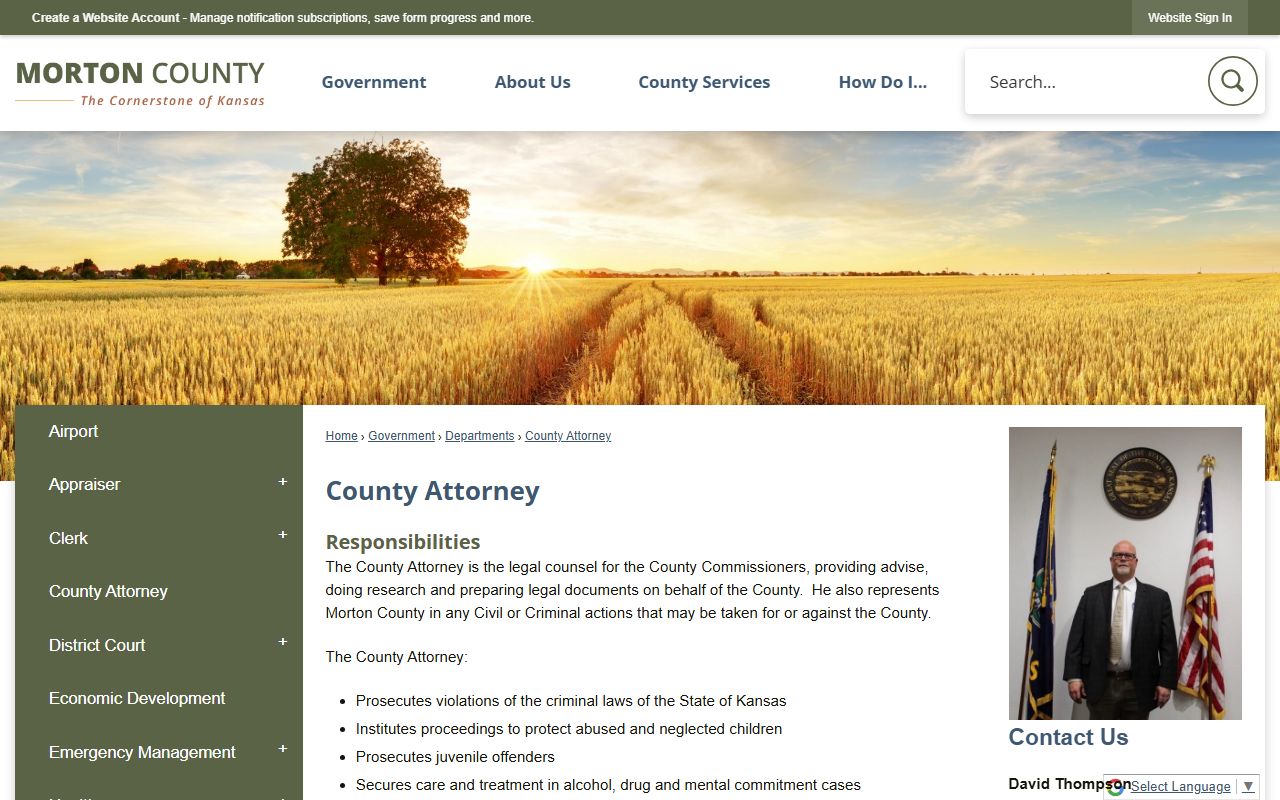
The prosecutor source matters because filed charges, diversion options, and case outcomes flow through the County Attorney before the court record is complete.
Search Morton County Criminal Cases
Use Kansas CaseSearch for public Morton County criminal case information in district court. Search by case number when possible. If the number is unknown, use the defendant's name or other criteria the portal offers to public users. A public result may show the case caption, case type, charges or allegations when public, filing date, docket events, hearings, disposition, sentence, and financial fields.
- Search Kansas CaseSearch by criminal case number, defendant name, or other public criteria.
- Narrow to Morton County District Court or the 26th Judicial District when filters are available.
- Open the case and read the docket entries in date order.
- Check for plea, disposition, sentencing, probation, fines, restitution, warrants, or appeal entries.
- Request certified copies from the Clerk of the District Court if an official judgment, sentence, or order is needed.
For a closer look at the charge itself, use the separate Morton County arrest records and court charges path. For current jail custody, use the sheriff or inmate search channels because court records and jail records are separate systems.
Morton County Criminal Case Flow
Criminal court records grow as the case moves through the District Court. The first public entries may be a complaint or information, then appearance, bond, arraignment, motions, hearings, plea or trial, disposition, sentence, probation, and later post-judgment activity. Each stage may create a docket entry, order, form, or financial obligation if the event is public.
Case flow: Charges Filed › Arraignment › Pretrial / Motions › Plea or Trial › Disposition › Sentencing
| Stage | What Happens |
|---|---|
| Charges Filed | The prosecutor files a complaint or information alleging a Kansas criminal offense. |
| Arraignment | The defendant is advised of charges and may enter a plea. |
| Pretrial / Motions | The parties file requests, address evidence, schedule hearings, and resolve legal issues. |
| Plea or Trial | The case ends by plea, trial verdict, dismissal, diversion, or another disposition. |
| Sentencing | The court imposes punishment, probation, fines, costs, restitution, or other conditions after conviction. |
Morton County probation and court services information connects sentencing records with supervision after a criminal disposition.
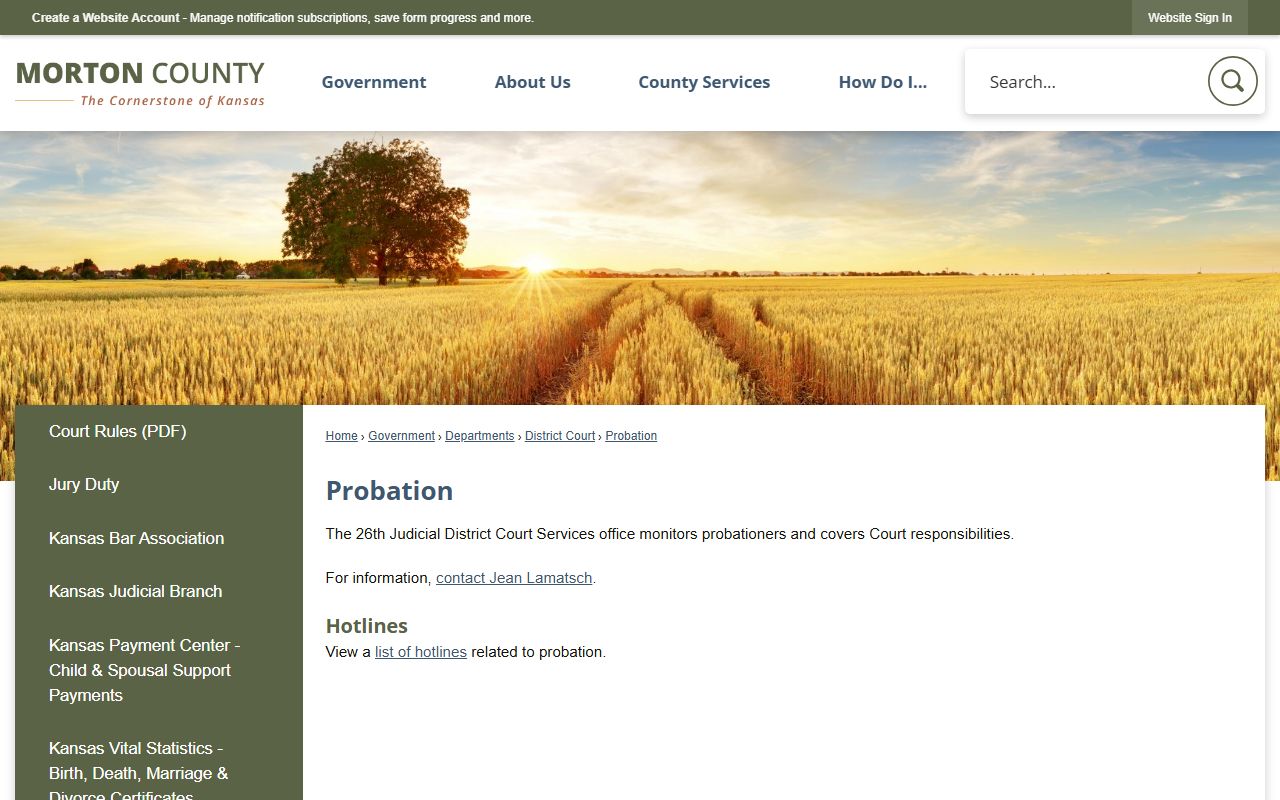
Probation entries may appear after sentencing and should be read as court supervision details, not as a new arrest record.
What Criminal Records Show
Morton County criminal court records use common Kansas court terms. A complaint is an initial charging document. An information is a prosecutor-filed charging document in a criminal case. A charge is the alleged offense. A plea is the defendant's formal response, such as guilty, not guilty, or no contest. Disposition means the current or final outcome. Sentence means the punishment ordered after conviction.
| Field | What It Shows |
|---|---|
| Case Number | Unique court case identifier for the criminal case. |
| Defendant | Person charged in the criminal case. |
| State / Prosecutor | Kansas or Morton County prosecution side, generally through the County Attorney. |
| Charges | Alleged offense, statute, severity, count, or amended charge when public. |
| Bond / Conditions | Release terms, bond amount, or appearance conditions when public. |
| Plea | Formal response, such as guilty, not guilty, or no contest. |
| Motions / Orders | Requests by parties and court rulings on those requests. |
| Disposition | Dismissed, convicted, acquitted, diverted, amended, appealed, or another outcome. |
| Sentence | Jail, prison, probation, fine, costs, restitution, treatment, or other court-ordered terms. |
| Financials | Costs, fines, fees, restitution, balances, and payment activity when public. |
Charges vs Convictions
A charge is an accusation filed in court. A conviction is an outcome after a guilty plea, no contest plea accepted by the court, or verdict. Criminal court records can show charges that were dismissed, amended, reduced, diverted, or ended in acquittal. Read each count separately because one case may have more than one charge and each charge can have a different disposition.
| Point | Charge | Conviction |
|---|---|---|
| Meaning | Alleged offense filed by the prosecutor. | Court outcome finding guilt or accepting a plea. |
| Timing | Appears near the start of the case. | Appears after plea, verdict, or judgment. |
| Record Risk | May later be amended, dropped, dismissed, or diverted. | May trigger sentencing, probation, fines, restitution, or expungement waiting periods. |
| How to Read | Check statute, count, filing date, and amendments. | Check final disposition, sentence, and post-judgment entries. |
Note: A case search is not a complete criminal-history background check and should not be read as one.
Diversion and Defense Records
The County Attorney page links diversion materials. Diversion can affect how charges, pleas, dispositions, and later expungement appear in criminal court records. The diversion application asks for identifying information, crimes charged, complaint date, DUI history, traffic or CDL status, official driving record for traffic violation applications, felony and drug felony eligibility, domestic violence diversion history, and written explanations about why diversion serves justice and community interests.
Public defense may also appear in criminal court records. The Kansas State Board of Indigents' Defense Services provides counsel through public defender offices and assigned counsel. Research did not locate a Morton County-specific public defender office listing, so the best supported route is Kansas BIDS or assigned counsel as directed by the court for eligible defendants.
Kansas BIDS is the official statewide public defense source connected to qualifying criminal cases.

BIDS information is relevant when a criminal docket shows appointed counsel, indigency findings, or defense representation changes.
The Kansas public defense system overview explains how public defender offices and assigned counsel are used in Kansas.

That statewide structure fills the local gap where no separate Morton County public defender office was confirmed in the research.
Sealed vs Expunged Criminal Records
Restricted criminal court records require careful reading. A sealed record is closed from ordinary public access by law or court order. Expungement is a court process that restricts access to eligible convictions, arrest records, and diversion agreements. In Kansas, expungement does not mean every agency can never see the record. Some criminal justice, licensing, employment, firearms, or statutory uses may remain.
| Point | Sealed | Expunged |
|---|---|---|
| Public Visibility | Closed from ordinary public view by rule, order, or statute. | Restricted after the court grants an expungement petition. |
| Starting Point | Case type, court order, confidential filing, or protected information. | Petition filed in the court tied to conviction, arrest record, or diversion. |
| Examples | Juvenile, adoption, care/treatment, protected information, sealed documents. | Eligible convictions, arrest records, or diversion agreements under Kansas law. |
| Limits | May still be available to the court or authorized users. | May still be available for specified law-enforcement, licensing, or statutory purposes. |
K.S.A. 21-6614 is the Kansas adult expungement statute for certain convictions, arrest records, and diversion agreements.
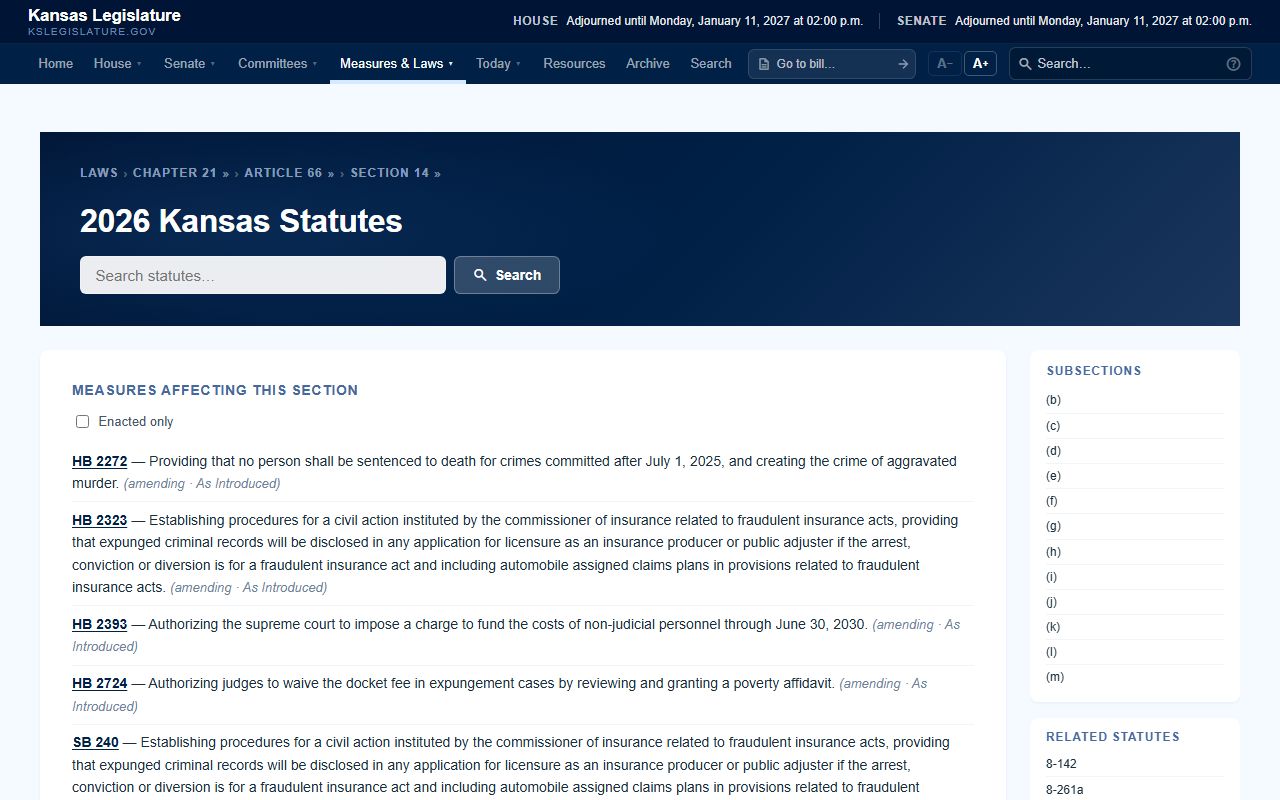
The statute is the key source for adult criminal expungement timing and eligibility, but local filing steps should be confirmed with the clerk.
Morton County Criminal Access
Adult criminal court records are generally searched through court access channels, but Kansas law and court rules restrict some content. KORA supports public inspection of public records unless another law closes the record. Kansas Supreme Court Rule 22 controls public electronic access to district court case records. K.S.A. 45-221 lists records not required to be disclosed, including criminal investigation records, medical records, privileged records, sealed records, and security records.
Key statutes: K.S.A. 45-218 supports inspection of open records, K.S.A. 45-221 lists disclosure limits, and K.S.A. 22-4522 defines BIDS responsibilities for qualifying indigent defense.
For certified copies of a judgment, sentence, disposition, or order, contact the Clerk of the District Court. State court records guidance lists $0.25 per page, $10 per certified document, and mailing charges. If the case involves a warrant or current custody, court records should be cross-checked with the issuing court or sheriff because databases can update at different times.
Restricted Criminal Court Records
Juvenile records are not treated like adult Morton County criminal court records. K.S.A. 38-2309 governs juvenile court record disclosure and preservation, and K.S.A. 38-2312 governs juvenile expungement. Public portal descriptions also restrict juvenile offender and child-in-need-of-care cases. Adoption, care/treatment, protected personal information, confidential victim/witness details, sealed warrants, and some protection order data may also be absent from public criminal searches.
Criminal investigation records are a separate category. KORA does not require disclosure of all investigation records, and body or vehicle camera recordings have their own Kansas access rules. A court record may show a criminal case filing while police reports, investigative files, medical details, or protected addresses remain withheld or redacted.